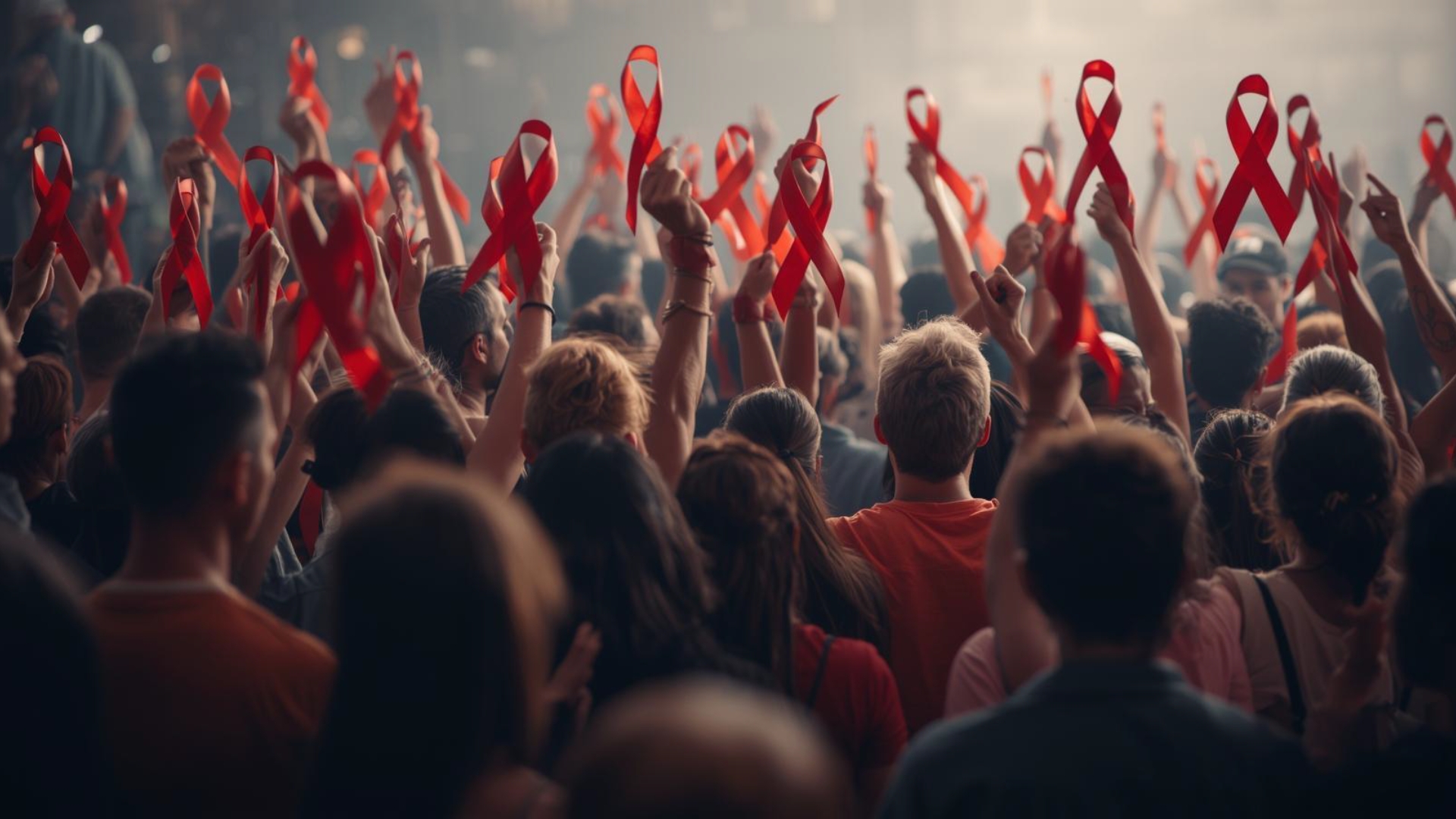
As the world prepares to mark World AIDS Day on December 1, 2025, we are confronting a paradox. On one hand, decades of effort have brought significant gains in the fight against HIV. On the other hand, a historic funding shock, combined with social and legal backsliding, threatens to unravel much of what was achieved. The theme for this year, “Overcoming disruption, transforming the AIDS response,” captures that tension beautifully.
A Fragile Landscape
According to the 2025 Global AIDS Update from UNAIDS, the world had made real progress by the end of 2024. New infections had fallen by about 40 percent since 2010, and AIDS-related deaths decreased by around 56 percent in the same period. But even before this year’s turmoil, the response was incomplete. Approximately 1.3 million new infections occurred in 2024, a figure nearly unchanged from the previous year.
The crux of the current crisis lies in a sudden downturn in donor support. UNAIDS warns that without this funding restored, we could see an additional 6 million HIV infections and 4 million AIDS-related deaths by 2029. That projection should ring alarm bells across the global health and development community.
Disruption Beyond Dollars
The financial shock is not the only disruption. UNAIDS is also pointing to worrisome legal and social trends. Criminalization of same-sex relationships, drug use, and gender-diverse identities is rising in certain countries, cutting off access for some of the most vulnerable populations. Meanwhile, community-led services, often the most effective way to reach marginalized groups, are being pushed to the margins when they are needed most.
Still, in many places, communities are stepping up. UNAIDS highlights, for example, how young people in Ethiopia have organized via WhatsApp to support one another. Mothers have rallied to ensure children continue treatment, and grassroots radio is delivering accurate health messages when formal systems are faltering. These are not backup systems. They are lifelines.
Innovation as a Beacon: Lenacapavir and the Future of Prevention
At a moment when the response feels precarious, new prevention tools offer a bright horizon. Chief among them is lenacapavir, a long-acting injectable PrEP that requires administration only twice a year. In July 2025, at the International AIDS Society conference, WHO formally recommended lenacapavir as part of its global prevention toolkit.
Clinical data strongly support this move. In the WOMEN‑FOCUSED PURPOSE 1 trial, lenacapavir demonstrated zero new infections among participants. In the broader PURPOSE 2 trial, covering cisgender men, transgender individuals, and non-binary people, there was a 96% reduction in HIV risk in the lenacapavir group compared to daily pills.
WHO’s guidance also simplifies how HIV testing should be done for people using long-acting PrEP. Rapid HIV tests can now support community and pharmacy-based delivery of lenacapavir, helping to reduce traditional barriers of cost and complexity.
UNAIDS has welcomed these guidelines, noting that lenacapavir could be especially valuable for populations who struggle with daily pill adherence or face high levels of stigma and access barriers.
What This Means for NGO and Nonprofit Leadership
For leaders in the nonprofit and international development sector, World AIDS Day 2025 is a call to clarity and action. The past several months underscore an urgent reality. The future of the HIV response will not look like its past.
First, advocacy must sharpen. This is not a moment for incremental asks. It demands political courage, cross-border solidarity, and renewed commitments to human rights. NGOs must mobilize to bridge the funding gap and challenge regressive laws and policies that undermine access for key populations.
Second, we must double down on community-led structures. As the disruption shows, they are not auxiliary. Peer networks, local collectives, and community-based outreach must be resourced and empowered, as they often hold the response together when formal systems falter.
Third, we have to scale innovation. Lenacapavir is not a luxury. It is a strategic asset. Organizations should push for its rapid adoption, negotiating for equitable pricing, working with regulatory bodies, and helping communities demand it in ways that reflect their realities.
Finally, financing models need rethinking. Traditional donor pathways alone will not sustain the response in this volatile environment. Blended finance, social contracting, domestic resource mobilization, and public-private partnerships are part of a reimagined response that is less fragile, more resilient, and driven from within.
A Moment of Choice: Retreat or Transform
On this World AIDS Day, the message from the global health sector must be unequivocal. We will not retreat. The path forward demands transformation, not just because it is morally right, but because it is necessary.
If we act with urgency, innovation, and solidarity, we can safeguard decades of progress. We can scale tools like lenacapavir. We can rebuild systems that are rights-based, community-led, and sustainable. We can reset the course toward the goal of ending AIDS as a public health threat by 2030.
Now is the time to choose transformation. The cost of inaction is too high.
Sources:
- UNAIDS – World AIDS Day 2025: Overcoming disruption, transforming the AIDS response
- UNAIDS – Global AIDS Update 2025: “AIDS, Crisis and the Power to Transform”
- WHO recommends injectable lenacapavir for HIV prevention
- UNAIDS press release welcoming new WHO guidelines on lenacapavir
- Long-acting injectable lenacapavir shows strong efficacy: WHO
- UNAIDS Executive Summary (PDF) – Global AIDS Update 2025
- UNAIDS press release on bold transformation and restructuring