
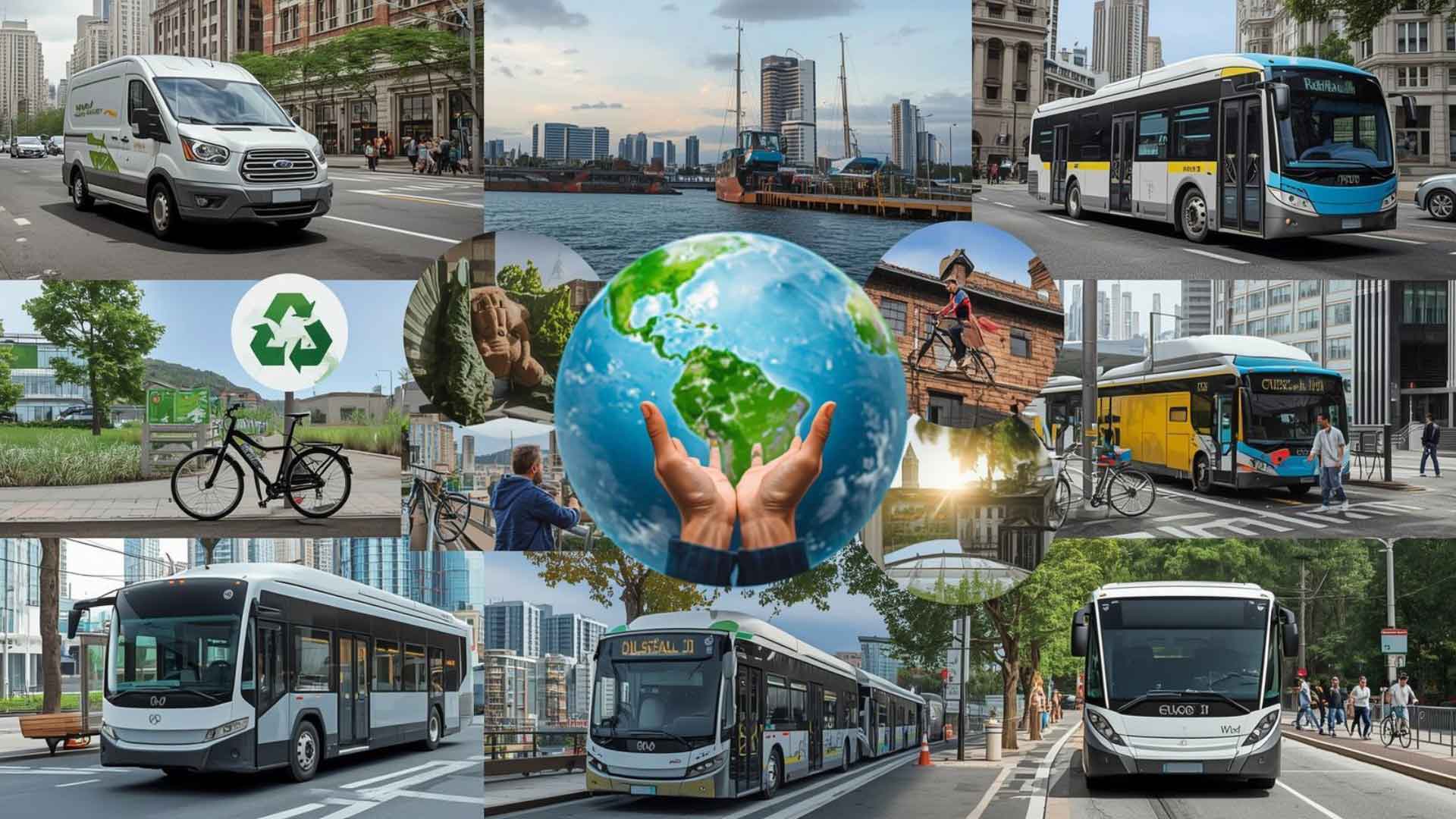
On 26 November, the world formally recognized World Sustainable Transport Day, a designation born from United Nations General Assembly Resolution A/RES/77/286, adopted during the Assembly’s 77th session in May 2023. What may at first glance appear to be a symbolic commemoration is, in fact, an urgent call to action, especially for civil society actors committed to international development, climate justice, and social inclusion.
This resolution was championed by Turkmenistan and co-sponsored by more than sixty countries, reflecting widespread political will. At its core, the resolution invites states, UN agencies, regional bodies, donors, the private sector, and NGOs to mark 26 November through education, public events, and programs that deepen awareness of sustainable transport challenges.
Why This Matters for NGOs
Transport is not a niche policy area; it is one of the pivotal levers for sustainable development. The United Nations defines sustainable transport as “the provision of services and infrastructure for the mobility of people and goods in a manner that is safe, affordable, accessible, efficient, and resilient, while minimizing carbon and other emissions and environmental impacts.”
From the perspective of nonprofit and NGO leadership, the significance of transport runs along three interlinked dimensions: climate, equity, and systems transformation.
Transport contributes roughly one-quarter of global energy-related greenhouse gas emissions. Addressing these emissions is not optional; transforming mobility systems is central to achieving climate mitigation and adaptation goals. Sustainable transport also expands access to education, employment, health services, and social opportunities. The resolution emphasizes socially inclusive infrastructure, urging investments that benefit marginalized and underserved communities.
A key aim of the resolution is to enhance intermodal transport connectivity, which involves “the development of integrated transport systems across all modes, including roads, railways, waterways, and ports.” In many low- and middle-income contexts, transport systems remain fragmented; NGOs dedicated to regional development or infrastructure equity should consider this a key political priority. The resolution also encourages the mobilization of financial and technical support, particularly for developing countries, through cooperation among UN bodies, multilateral institutions, and the private sector.
Political Momentum and Institutional Implications
The adoption of World Sustainable Transport Day is more than rhetoric. In its opening remarks at a UN event marking the occasion, the Department of Economic and Social Affairs (DESA) stated: “Sustainable transport systems are critical to achieving the Sustainable Development Goals and the Paris Agreement, yet trillions of dollars will be required globally in the coming decade to finance low-carbon transport infrastructure.” The same remarks emphasized that “emerging technologies, including electric mobility, smart transit systems, and alternative fuels, must be scaled in parallel with investments to deliver both access and emissions reductions.”
Notably, the resolution also calls for a high-level meeting on sustainable transport. That meeting provides a platform to align transport strategies with the 2030 Agenda, the Paris Agreement, the New Urban Agenda, and the Global Road Safety Declaration. NGOs have the opportunity to shape such agendas from the ground up by participating in consultations, offering expertise, and sharing best practices.
Organizations with long-standing transport and climate mandates, such as SLOCAT, welcomed the resolution, noting that “World Sustainable Transport Day will consolidate multi-stakeholder cooperation and reinforce the role of low-carbon transport within intergovernmental processes.” Likewise, the International Road Transport Union (IRU) has backed the resolution, stating: “The establishment of World Sustainable Transport Day is a special opportunity to reflect on just how crucial transport is in every aspect of our daily lives.”
Risks and Strategic Challenges
Even as the momentum is positive, several risks warrant attention from NGO leaders. Financing gaps, governance fragmentation, equity blind spots, and weak accountability mechanisms could undermine progress. Sustainable transport projects risk being confined to urban or affluent populations unless civil society actively ensures that they are inclusive in design. Likewise, political commitment must translate into measurable outcomes, which requires consistent monitoring and transparent reporting frameworks.
Given the political opening that this resolution provides, NGO leaders can take several strategic steps. They can engage in policy dialogue, advocate for integration of transport priorities into NDCs and SDG implementation plans, and forge partnerships with UN agencies, donors, and private actors. They can lead research, evidence-based communications, and awareness campaigns, as well as pilot local initiatives such as bus rapid transit systems or electric mobility solutions. Strengthening monitoring mechanisms ensures that these efforts are not merely symbolic but yield tangible social, environmental, and developmental impacts.
World Sustainable Transport Day is therefore more than a symbolic calendar event. It represents a rare and timely political inflection point to elevate transport from a technical concern to a central lever of sustainable development. By engaging strategically now, civil society can help guide the transformation of global mobility systems toward greener, more equitable, and more resilient futures.
Article Sources: